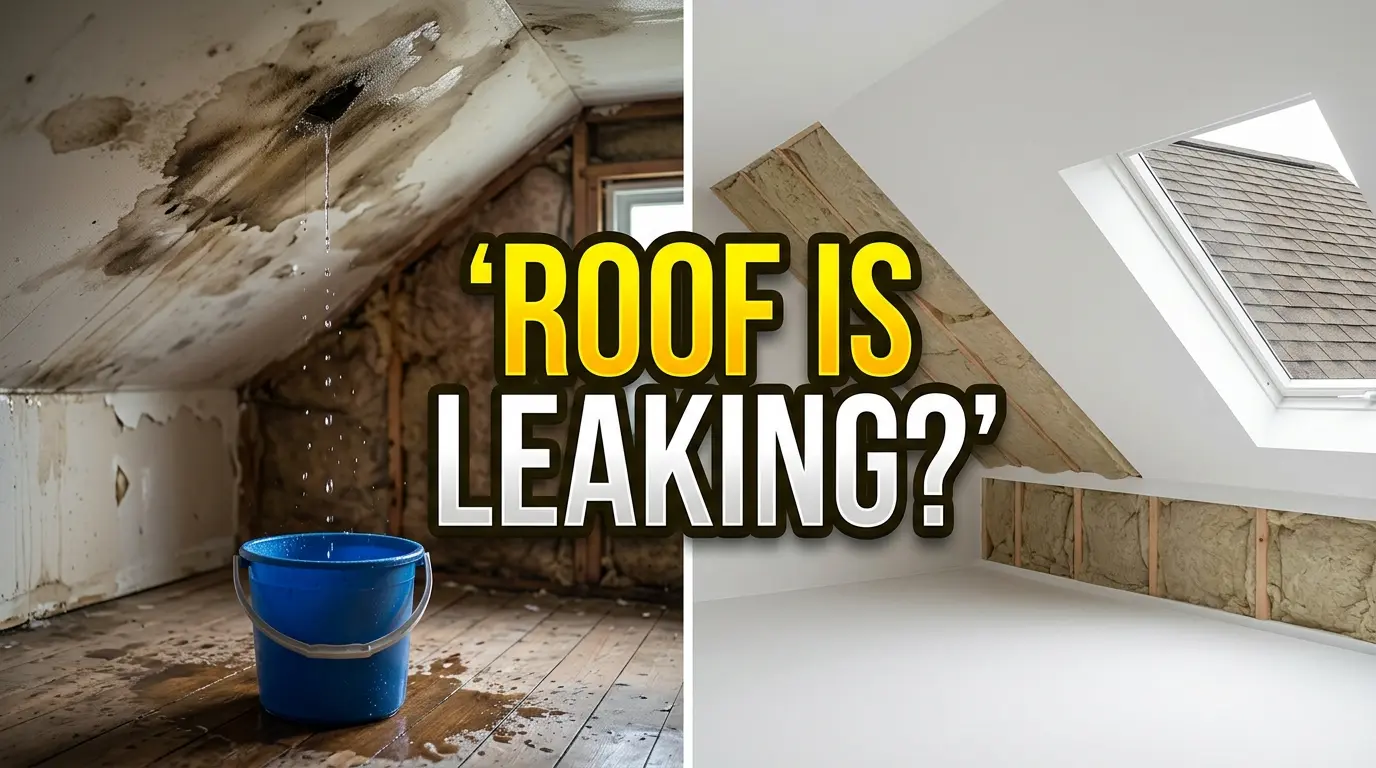
A roof leak never shows up at a convenient time. It is usually in the middle of a New Jersey storm, with water dripping onto the floor and a stain spreading across the ceiling. It is stressful, but what you do in the first hour makes a real difference.
A leak is not just a water problem. Left alone, it soaks insulation, rots framing, and grows mold that gets expensive to fix. The goal is simple: protect your home, slow the damage, and get the roof repaired before the next storm. The good news is that most leaks are fixable once the source is found. This guide walks through what to do the moment you spot a leak, how to limit the damage, what causes most leaks in New Jersey, and when to call a 24/7 crew.
First Steps the Moment You Spot a Leak
Stay calm and move fast. Your home comes first, the roof comes second:
How to Limit the Damage Until Help Arrives
Once your home is protected, your job is to slow the water down. If you can safely reach the attic, trace the drip to its source and set a bucket under it. Pull insulation away from the wet spot so it does not soak through to the ceiling below.
If the leak is serious and the weather has cleared, a 24/7 crew can tarp the roof to keep water out until the full repair. A tarp buys you time and stops the leak from spreading while a permanent fix gets lined up.
 24/7 Emergency
Act Fast
The First Hour Makes the Difference
24/7 Emergency
Act Fast
The First Hour Makes the Difference
What Causes Most Roof Leaks in New Jersey
Most leaks trace back to a handful of causes. Old or cracked shingles let water through once they lose their seal. Failed flashing around chimneys, vents, and valleys is a top culprit, since those are the weak points of any roof. New Jersey winters add ice dams that push water under the shingles, and clogged gutters back water up onto the roof edge.
Storm damage from wind and falling branches opens sudden holes, and sometimes the roof is simply old and at the end of its life. A good inspection finds the real source instead of guessing, so the roof repair actually holds.
When to Call a 24/7 Roofing Crew
Some leaks can wait a day. Many cannot. Call right away if water is pouring in, if the ceiling is sagging, or if a storm has torn part of the roof open. The longer water sits, the more it ruins insulation, framing, and drywall, and a fast response keeps a small repair from turning into a full replacement.
JRB Siding LLC runs 24/7 emergency roof repair in New Jersey, so a real crew answers when you call. We find the source, stop the water, and get your roof back to watertight, day or night.
Stop Your Roof Leak in New Jersey
A leaking roof will not wait, and neither do we. Call our 24/7 crew or request a free estimate and protect your home today.
Frequently Asked Questions
No. A wet or storm-damaged roof is dangerous. Check the attic from inside if you can, and leave the roof itself to a pro with the right gear.
Never. Even a slow drip soaks insulation and framing over time. A small leak today becomes a much bigger, costlier repair if you wait.
We run a 24/7 emergency line. When a roof is leaking, call (862) 371-2933 and we will move fast to protect your home.
Often it can be repaired, especially if the damage is limited. We inspect first and tell you straight whether a repair or a replacement makes more sense.
It can, and fast. Trapped moisture grows mold within days, which is why stopping the leak quickly matters so much.